![5 Powerwashing Tactics to Kill Driveway Algae for Good [2026]](https://powerwashexpertz.com/wp-content/uploads/2026/01/5-Powerwashing-Tactics-to-Kill-Driveway-Algae-for-Good-2026.jpeg)
I remember the day I finally realized that my driveway’s persistent algae problem was more than just an eyesore—it was a sign that I wasn’t tackling the root cause effectively. I had tried scrubbing with brushes and blasting with my trusty old power washer, but those stubborn green patches kept coming back. It was frustrating and embarrassing, especially when neighbors started to notice. The lightbulb moment came when I discovered that not all powerwashing methods are created equal. Some techniques actually eradicate algae for good, saving me time, money, and that uncomfortable feeling of neglect.
The Power of the Right Techniques in Powerwashing
If you’re tired of algae ruining your driveway’s curb appeal, you’re not alone. I know firsthand how clinging to ineffective cleaning routines can become a cycle of disappointment. The good news? There are proven strategies that, when applied correctly, can banish driveway algae for good. Today, we’re diving into five tactical approaches that I’ve tested and trusted—ones that deliver reliable, long-lasting results. By the end of this read, you’ll have a clear game plan to reclaim your driveway’s shine and health. And trust me, with the right methods, you’ll wonder why you ever settled for less.
Is Powerwashing Really the Solution Worth the Hype?
Early in my journey, I made the mistake of relying solely on high pressure, thinking more force meant better cleaning. That was a rookie error that actually damaged my driveway surface and made the algae worse. Research shows that using improperly calibrated pressure can etch concrete and create tiny crevices where algae thrive. So, if you’re skeptical about powerwashing’s effectiveness or worried about causing damage, you’re not alone. But understanding the nuances—like selecting the right pressure and cleaning solutions—can turn your efforts into a true success story. Want to learn more about how to powerwash safely and effectively? Check out this guide for trustworthy techniques that deliver lasting results.
Now that you know the importance of applying the correct tactics, let’s look at the specific methods that can eliminate algae once and for all, starting with preparation and safety tips that set the foundation for effective cleaning.
Prepare Your Equipment and Environment Carefully
Before starting, ensure your powerwasher is in top shape. Inspect hoses, nozzles, and the power source. Think of your powerwasher as a painter’s brush—an uneven or faulty tool ruins the entire work. I once tried to clean my driveway with a neglected machine, which sputtered and unevenly sprayed water, leaving patches of algae untouched. After a thorough check and replacing a worn nozzle, the spray became consistent, making the job much easier. Also, clear the area of delicate plants and outdoor furniture to prevent damage. Using plastic sheeting or tarps as a shield can save you from unwanted messes and protect your landscaping. Proper prep not only keeps your environment safe but ensures the cleaning process is efficient and effective.
Choose the Right Pressure and Nozzle for Your Surface
Understand Pressure Levels
Concrete driveways require moderate pressure—usually around 2,000 to 3,000 PSI—similar to using a garden hose at full blast but with more control. Too high, and you risk etching the surface; too low, and algae remain stubborn. I once attempted to use my high-pressure setting on a delicate brick pathway, which caused visible erosion. Learning to adjust the pressure dial in tandem with the nozzle was a game-changer. For stubborn algae, increasing the pressure slightly helps, but always test first on a small area.
Select the Correct Nozzle
Nozzles control spray pattern and intensity. A 25-degree nozzle provides a wider spray for general cleaning, akin to a gentle shower, while a 15-degree nozzle concentrates force for tough spots. I prefer starting with the wider 25-degree nozzle and switching to narrower ones only when necessary. Remember, the smaller the angle, the more intense the water jet, which can damage softer surfaces. Using the wrong nozzle on delicate concrete can leave scars, making algae more prone to regrowth. To ensure you’re using the best setup, check recommendations on trusted guides like this trusted resource.
Apply the Right Cleaning Solutions
Water alone might remove surface dirt but struggles against embedded algae. Using an appropriate chemical solution enhances effectiveness. I experimented with different eco-friendly detergents, and found that a mix of water, mild bleach, and a bit of dish soap worked wonders. Apply the solution generously, letting it soak for 10-15 minutes. This is similar to letting a stain remover sit; it breaks down the organic matter, making removal easier. Use a low-pressure spray to evenly distribute the solution, ensuring every algae patch gets treated. For stubborn algae, consider commercial degreasers or algae-specific cleaners, but always verify their compatibility with your surface to avoid damage.
Use Patience and Technique to Maximize Results
When starting the cleanup, adopt slow, overlapping passes rather than rushing. It’s like mowing a lawn; steady, controlled strokes create uniform results. I once tried to hasten the process by speeding through, but I ended up missing spots and causing splashes. Focus on maintaining a consistent distance—typically 12 to 18 inches from the surface—and keep your spray perpendicular to the surface for even cleaning. Never hold the nozzle in one spot for too long; this can gouge the surface or force water into cracks, inviting future algae growth. After rinsing to clear debris and any residues, inspect the surface carefully. Reapply pressure or solution where needed, especially in heavily infested areas. This meticulous approach ensures the algae’s roots are disrupted, making future regrowth significantly less likely.
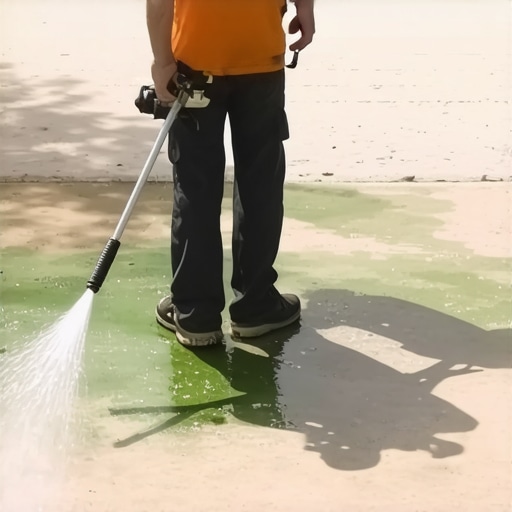
While many believe that cranking up the pressure and scrubbing rapidly will give the best results, the truth is that most people overlook the subtle yet crucial details that make or break a power washing job. One widespread myth is thinking that higher PSI guarantees a cleaner surface, but in reality, excessively high pressure can damage delicate materials like brick or soft concrete, creating new crevices for algae to thrive. As experts highlight, understanding the exact pressure suitable for your material can not only preserve your property’s integrity but also improve cleaning efficacy, as detailed in this trusted guide.
Why Choosing the Wrong Nozzle Damages Your Driveway
Many DIY enthusiasts make the mistake of using the narrowest, most concentrated nozzle for every job. This not only risks etching the surface, especially on older or softer concrete but also wastes energy by focusing excessive force where it’s unnecessary. The correct nozzle—usually a wider one like 25 degrees—distributes water evenly, reducing surface damage while still tackling algae efficiently. Advanced users know that selecting the right nozzle angle is an art that depends on surface condition and material, leading to more durable results and less rework. For guidance on enhancing your technique, check these expert tips.
Another common misconception is that water alone can remove all stubborn algae, but that misses the nuance of chemical solutions. Proper cleaning solutions contain specific agents that break down the organic matter embedded deep within pores, which water pressure alone cannot reach. Using eco-friendly and surface-compatible detergents, applied correctly, can dramatically boost results. Be cautious, however, since some over-the-counter solutions might cause surface etching or discoloration if misused. Always opt for proven methods and ensure compatibility, as discussed in this comprehensive article.
How Do Advanced Techniques Prevent Future Algae Growth?
Many homeowners underestimate the importance of technique and timing, believing that a quick blast will serve as a long-term fix. The critical nuance involves controlling your spray to avoid gouging and ensuring comprehensive coverage of all shaded and porous areas prone to algae buildup. Using consistent, overlapping passes at optimized distances, combined with appropriate chemical treatment, creates an environment hostile to regrowth. Regular maintenance with these precise methods ensures that algae doesn’t just get temporarily cleaned but is effectively prevented from re-establishing itself. For deeper insights, explore this ultimate guide.
Maintaining your power washing equipment is crucial to ensure reliable, effective results over time. Personally, I recommend investing in a high-quality, adjustable pressure washer like the Simpson MSH3125 MegaShot, which offers precise PSI control and durability, enabling you to tailor the cleaning process to different surfaces and prevent damage. Coupled with a set of versatile nozzles—such as the 25-degree for general cleaning and the 15-degree for stubborn stains—you gain the flexibility needed for thorough, safe cleaning. Regularly inspecting hoses for wear, replacing worn nozzles, and checking spray tips helps prevent equipment failures that could hinder your work. Remember, a well-maintained power washer not only delivers consistent results but also extends its lifespan, saving you money in the long run. For persistent issues, consider scheduling routine professional tune-ups; experts recommend annual servicing to keep your machine running at peak performance. As the industry advances, newer models incorporate smart features like digital pressure gauges and eco-friendly operation modes, indicating that staying current with newer technology can enhance efficiency and safety. To stay ahead, I suggest integrating advanced maintenance routines, such as flushing your system after each use and storing it indoors during harsh weather, to prevent corrosion and freezing. Curious about how to keep your equipment in prime condition? Check out this guide for comprehensive maintenance strategies that ensure your power washing gear serves you reliably for years. Don’t forget—regular maintenance not only keeps your equipment running smoothly but also guarantees that each power washing effort achieves the long-term cleanliness and curb appeal you desire. For best practices, consider scheduling professional inspections annually, especially if you handle frequent projects or high-pressure jobs. Ready to upgrade your toolkit? Look into advanced nozzles and pressure gauges that make precision cleaning effortless. Remember, a proactive maintenance routine coupled with the right tools transforms power washing from a chore into a lasting investment in your property’s appearance and value.
My Surprising Lessons Beyond the Surface
One of the most eye-opening lessons I learned was that patience can be more powerful than brute force in power washing. Rushing through the process only led to missed spots and surface damage, which gave algae a perfect hiding place. Slow, deliberate passes, combined with the right pressure and solutions, created a durable clean that lasted much longer. I also realized that surface-specific techniques—like adjusting nozzle angles or chemical formulas—are not just tips but essentials. Over time, I discovered that consistent learning and adapting your approach pays off, turning a tedious chore into a rewarding maintenance ritual.
What Tools Make the Difference
After experimenting with various equipment, I found that investing in high-quality, adjustable pressure washers significantly improves results. Brands like Simpson and Karcher have proven reliable for me, offering precise PSI control and durability. Nozzle kits with multiple angles, especially the 25-degree and 15-degree, allow for tailored cleaning depending on the surface. Regularly checking and maintaining hoses and spray tips not only prevents equipment failure but also keeps your power washing sessions effective and safe. For more in-depth equipment choices and maintenance tips, I recommend checking this comprehensive guide.
Embrace Your Power Washing Journey
Your next driveway cleaning session can be more than just a chore—it’s an opportunity to master a skill that boosts your home’s curb appeal and longevity. Remember, the key to lasting results lies in adopting the right techniques, selecting proper tools, and maintaining patience throughout the process. Don’t be discouraged by initial setbacks; every stain or algae patch is a chance to refine your approach. With consistent effort and a willingness to learn, you can transform your property’s exterior. So, are you ready to take control of your power washing routine and see the lasting results you deserve? Share your experiences or questions below—I’d love to hear your journey towards a cleaner, more beautiful home exterior.