I remember the first time I tried power washing my house. I was eager to make my home look fresh and inviting, but I ended up with streaks, uneven cleaning, and a sense of frustration. It was a lightbulb moment that taught me the hard way how important proper technique really is. Since then, I’ve learned that achieving trustworthy, lasting results doesn’t happen by chance — it’s about knowing the right strategies and safety tips. If you’ve ever felt overwhelmed by the prospect of cleaning your home’s exterior, you’re not alone. Many homeowners face the same doubts and fears about damaging their property or wasting time and money. But here’s the truth: with the right approach, power washing can be safe, effective, and even enjoyable. Today, I want to share my tried-and-true methods so you can power wash your home with confidence and see reliable results every time.
Prepare Your Equipment and Environment
Start by selecting the right nozzle and pressure settings for your home’s exterior. Think of it as choosing the right brush for painting—using too high pressure can damage surfaces, while too low may be ineffective. I once grabbed my pressure washer without checking the nozzle, and the powerful spray chipped a small section of my siding. Always double-check your equipment to match the surface you’re cleaning.
Protect Surrounding Areas
Before you begin, clear the area of delicate plants, outdoor furniture, and fixtures. Cover nearby windows and electrical outlets with plastic sheeting. During my first project, I overlooked this step, and the spray caused minor water intrusion, leading to a quick cleanup. Precaution saves time and money later.
Apply Cleaning Solution Properly
Mix a cleaning solution suited to the surface—mild detergent for siding or specialized cleaners for tougher grime. Use a low-pressure spray to evenly coat the area, allowing the solution to loosen dirt and mold. I remember trying to spray without diluting the cleaner, which resulted in streaky residue. Proper application ensures thorough cleaning and protects your surfaces.
Let the Solution Work
Allow the solution to sit for 5-10 minutes, but don’t let it dry. This is similar to letting soap sit on your hands when washing—time enhances cleaning power. During my first attempt, rushing through this step left some stains untouched, so patience is key for consistent results.
Use Correct Technique for Rinsing
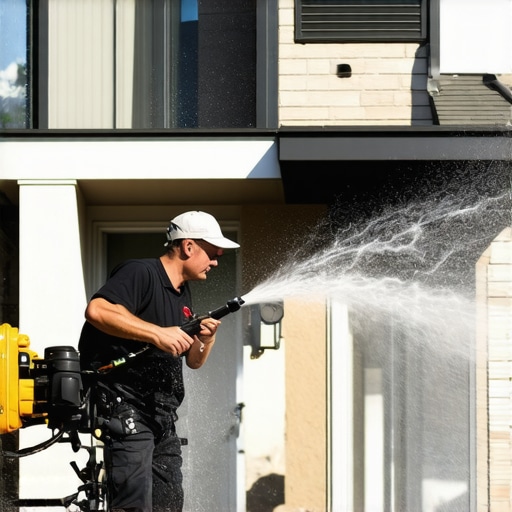
Switch to a higher-pressure nozzle to rinse from the top down, maintaining about 2-3 feet distance. Keep the spray at a consistent angle to avoid gouging the surface. I once moved too close and caused a visible gouge in my deck, which was costly to repair. Maintain control and avoid focusing the spray in one spot.
Work in Sections
Divide your exterior into manageable sections, rinsing each completely before moving on. This prevents missed spots and uneven cleaning. I learned this the hard way when I skipped sections and had to go back over the entire wall, wasting time. Planning your work in sections makes the process more efficient and reliable.
Final Inspection and Touch-Ups
After rinsing, inspect your work for streaks or missed areas. Use a ladder or extension pole for hard-to-reach spots. Sometimes, a second pass is necessary for stubborn stains. I once missed a corner and had to redo it—attention to detail guarantees lasting results.
Clean Your Equipment
Finally, flush your pressure washer with clean water and store it properly. Proper maintenance prolongs your equipment’s life and ensures consistent performance for future projects. Neglecting this step led me to replace my nozzle sooner than expected.
By following these proven strategies and techniques, you’ll transform your power washing into a safe, effective process. Doing so not only improves your home’s appearance but also preserves its value and integrity. For more detailed guidance, check out trusted techniques for lasting exterior shine.
Many homeowners jump into power washing with enthusiasm, but often, they fall into traps that compromise their results or damage their property. Let’s dig deeper into some of the most misunderstood aspects of power washing and reveal the nuances that only seasoned experts are aware of.
Why Using the Highest Pressure Isn’t Always Better
One of the biggest myths is that cranking up the pressure guarantees a cleaner home. In reality, excessive pressure can gouge siding, strip paint, or etch delicate surfaces like wood or brick. I’ve seen homeowners damage their exteriors because they believed more force equals better cleaning. The truth is, selecting the right pressure depends on the surface—mild for siding, higher for concrete, but always within safe limits. For an in-depth guide on this, check out trusted techniques for lasting exterior shine.
The Trap of Using the Wrong Nozzle
Many think that simply choosing a wide or narrow nozzle is enough, but the nozzle’s angle and size critically impact the outcome. Using a zero-degree nozzle on siding, for instance, can create streaks or damage. The nuanced choice of nozzle ensures even cleaning without harm. I once used a 0-degree nozzle on my deck and ended up with gouges—an expensive mistake I avoid now by understanding the subtleties. Proper nozzle selection is essential for safe, effective power washing. For advanced tips, visit power wash home with confidence.
Misjudging the Importance of Surface Preparation
Pre-cleaning the area by removing obstacles and covering delicate plants is often overlooked. Skipping this step can lead to water intrusion, stains, or even injury. The hidden nuance? Proper surface prep isn’t just about protection; it’s about ensuring the cleaning process doesn’t cause unintended harm. During my early attempts, I neglected this and paid the price with extra cleanup and repairs. Advanced experts know that surface prep is the foundation of trustworthy results. For detailed strategies, see proven strategies for reliable exterior cleaning.
What About the Myth of One-Size-Fits-All Cleaning Solutions?
Many assume that a generic cleaner is suitable for all surfaces, but surface-specific solutions are key. Using a harsh detergent on siding can cause discoloration, while a mild cleaner might be ineffective on tough grime. The advanced nuance? Match your cleaning solution to the material and dirt level. I’ve learned that investing in the appropriate cleaner, combined with proper technique, guarantees trustworthy, lasting results. For expert recommendations, explore trusted techniques for lasting exterior shine.
Have you ever fallen into this trap? Let me know in the comments. Remember, power washing is as much about technique and nuance as it is about equipment. By understanding these hidden details, you can avoid costly mistakes and achieve a truly trustworthy clean for your home’s exterior.
Keeping Your Power Washing Equipment in Top Shape
Investing in quality tools is only half the battle; maintaining them properly ensures consistent results and extends their lifespan. I personally rely on a few key pieces of equipment that have proven their worth over countless projects. For instance, a high-quality surface cleaner attachment is a game-changer for large flat surfaces like driveways and decks. It distributes water evenly, reducing streaks and damage, and saves me hours of work. Additionally, a durable extension wand allows me to reach high or tricky spots without risking my safety, all while maintaining control and precision.
To keep your pressure washer running smoothly, always flush the system with clean water after each use. This prevents buildup of debris and prolongs the life of the pump. I also recommend inspecting hoses and nozzles regularly for signs of wear or damage—replacing worn parts early can save you from costly breakdowns during crucial cleaning sessions. For advanced maintenance tips, check out trusted techniques for lasting exterior shine.
How do I maintain my power washing tools over time?
Maintenance is straightforward but essential. Keep your nozzles clean by soaking them in vinegar or using a nozzle cleaning kit—clogged nozzles reduce pressure and cleaning efficiency. Store your equipment in a dry, protected area to prevent rust and corrosion. Periodically check the pump oil level and change it as recommended by your manufacturer. Also, always use the correct pressure settings based on the surface; over time, consistent proper use prevents unnecessary wear and tear. Remember, a well-maintained tool is your best ally in achieving trustworthy, long-lasting results. As the industry evolves, I predict that smarter, more durable components and IoT-connected maintenance alerts will become standard, making upkeep even easier. For a comprehensive guide on keeping your equipment in perfect condition, explore proven strategies for reliable exterior cleaning.
The Future of Power Washing Tools
Looking ahead, I believe we’ll see a shift towards more eco-friendly and energy-efficient equipment. Battery-powered models with longer runtimes and intelligent pressure regulation will make power washing safer and more accessible for homeowners. Additionally, advancements in nozzle technology and surface sensors may allow for completely automated cleaning processes, reducing the chance of user error. For now, sticking with trusted, well-maintained tools is the best way to ensure your results stand the test of time. Make sure to try out a quality surface cleaner attachment and see how it transforms your workflow—trust me, it’s worth the investment!
The Hardest Lesson I Learned About Power Washing
Early in my power washing journey, I believed more pressure meant a cleaner home. That misconception led to gouged siding and damaged surfaces. The lightbulb moment was realizing that selecting the right pressure for each surface is crucial for trustworthy results. It’s a lesson that many overlook, but understanding it saves time, money, and frustration.
Three Myths About Power Washing That Held Me Back
One myth I used to believe was that using the highest pressure guarantees the best cleaning. Wrong. Excessive pressure can ruin delicate surfaces. Another false idea was that a one-size-fits-all cleaning solution works everywhere. In reality, surface-specific cleaners are essential for lasting shine without harm. Lastly, I thought equipment maintenance was optional—until I faced breakdowns that disrupted my projects. Proper upkeep is key to consistent, trustworthy results.
What Experts Won’t Tell You About Power Washing
Experienced professionals know that surface prep is the secret sauce. Covering plants and protecting fixtures isn’t just about safety; it’s about ensuring a flawless clean that lasts. Also, nozzle choice and control are more nuanced than they seem—using a zero-degree nozzle on siding, for example, can cause costly damage. These insights come from years of hands-on experience that I wish I had from the start, and they can make all the difference in your results.
My Essential Toolkit for Power Washing
A high-quality surface cleaner attachment is an absolute game-changer. It distributes water evenly and reduces streaks, saving hours of work. An extension wand helps reach high spots safely and precisely. I trust these tools because they deliver consistent, trustworthy results and protect my surfaces. For more advanced equipment tips, you can explore trusted techniques for lasting exterior shine.
Where to Go from Here
Invest in proper equipment, learn surface-specific techniques, and don’t rush the process. Remember, the goal isn’t just a clean home—it’s a trustworthy, lasting shine that preserves your property’s value. Keep practicing, stay safe, and don’t hesitate to seek expert advice when needed. Your home’s exterior will thank you for it.
Your Turn to Try Power Washing with Confidence
Power washing is more than just spraying water; it’s about technique, care, and patience. With the right knowledge and tools, you can achieve trustworthy results every time. So, what’s the first area you plan to tackle? Share your plans or questions below—I’d love to hear your power washing journey!
Reading through this post really resonated with my own experience of power washing for the first time. Like many homeowners, I was eager to get that spotless look but quickly learned how crucial the right technique is. One thing I’d add is the importance of testing a small area first, especially when dealing with delicate surfaces like siding or wood. I remember blasting a neglected corner too aggressively and it caused visible damage that took a while to fix. Now, I always start on a low pressure and gradually increase it, depending on the surface. It’s a bit more patience, but definitely worth it for trustworthy results. Have others found that doing a test patch first helps in preventing surprises? I’d love to hear your tips for choosing the correct pressure and nozzles for different materials—sometimes, it’s hard to tell just by looking.
I completely agree with the importance of surface preparation mentioned in the post—neglecting it can really lead to issues down the line. I’ve learned from my own experience that covering delicate plants and fixtures isn’t just about safety; it really helps achieve a more even clean and prevents water intrusion. I’ve also found that testing a small patch first, especially on siding with varying textures or age, can save a lot of headaches later. On the question of choosing the right pressure and nozzles, I usually start with a wider spray and lower pressure, then adjust based on how the surface responds. It’s all about patience and knowing your materials. Has anyone experimented with different nozzle types for specific surfaces like brick versus wood? I’d love to hear how others approach that to optimize their results.
This post offers such a comprehensive overview of power washing — I especially appreciate the emphasis on surface preparation and equipment maintenance. In my experience, investing in a good surface cleaner attachment really makes a difference in achieving even results and reducing streaks, especially on large areas like driveways. One thing I’ve learned is that water temperature can also influence cleaning effectiveness; occasionally, using warm water helps loosen stubborn grime more efficiently. I’m curious, has anyone experimented with different water temperatures, and do they notice a significant impact? Also, I’ve found that taking the time to inspect and replace worn nozzles before starting can save a lot of time and prevent damage. Would love to hear others’ tips on choosing the right nozzle angle for different surfaces, particularly on textured bricks or delicate sidings. What’s been your most effective technique for balancing pressure and safety? I think sharing these small insights can really elevate everyone’s power washing game.