![How to Power Wash Home Siding Without Peeling Paint [2026]](https://powerwashexpertz.com/wp-content/uploads/2026/01/How-to-Power-Wash-Home-Siding-Without-Peeling-Paint-2026.jpeg)
It was a warm spring afternoon when I finally decided to give my home a much-needed fresh look. Armed with my trusty power washer, I approached my siding, expecting a quick, satisfying clean. But within seconds, I saw it—that dreaded peeling paint starting to flake off, revealing bare patches I hadn’t noticed before. My heart sank. I had overlooked crucial tips, and now I was dealing with more damage than I bargained for.
That lightbulb moment hit hard. I realized that power washing, if not done carefully, can do more harm than good—especially to painted surfaces. Over the years, I’ve learned the importance of mastering the *how* of power washing, not just the *what*. Today, I’m here to share my proven strategies that help you achieve a deep clean without risking your paint job.
Why the Right Technique Matters When Power Washing Siding
Many homeowners dive into power washing expecting quick results, but without proper technique, they often end up with faded, peeling paint. The problem isn’t just aesthetic; it’s about preserving the integrity of your home’s exterior. A mistimed spray or using too much pressure can strip paint layers and cause long-term damage—something I learned the hard way. Trust me, the key lies in understanding the nuances of pressure, distance, and cleaning solutions.
In fact, a recent study highlights how incorrect power washing methods contribute to paint deterioration, leading to costly repairs down the line. You can find reliable expert tips that align with best practices on trusted sites like [Power Wash Expertz](https://powerwashexpertz.com/trust-power-wash-home-expert-tips-for-reliable-exterior-results). Having recognized my early mistakes—like setting my pressure washer to maximum and getting too close—I now advocate for gentle, controlled cleaning to preserve your paint and siding.
If you’re dealing with the same frustrating problems, don’t worry. We’ll explore step-by-step how to avoid common pitfalls and ensure a spotless, long-lasting finish. Ready to learn the secrets to power washing success? Let’s dive into the essentials that will save your paint and boost curb appeal.
Choose the Right Equipment and Setup
Start with a quality pressure washer that matches your home’s needs. For siding, opt for a model with adjustable pressure and a Gardens Hose connector. Before turning on the machine, inspect the nozzle for clogs and make sure the spray wand is securely attached. Think of your pressure washer as a paintbrush; the right tools lead to a better finish.
Prepare Your Surface Thoroughly
Clear the area of outdoor furniture, plants, and loose debris. Cover delicate plants with plastic sheeting or drop cloths to shield them from overspray. Check for loose paint or damaged siding that may need repairs before cleaning. This prep work prevents surprises and ensures an efficient wash.
Use Controlled Pressure and Distance
Set your pressure washer to a low or medium setting, roughly around 1500-2000 PSI. Hold the nozzle about 12 inches from the surface, gradually moving closer if needed, but never onto the siding directly. Imagine your spray as a gentle rain; too strong and it’ll damage, too gentle and it won’t clean.
Practice Your Technique on a Hidden Spot
Before starting, test on a small, inconspicuous section. I remember once testing on the back corner of my siding; I adjusted my distance and pressure until I saw the grime lift without chipping paint. It’s like tuning a guitar—small adjustments make all the difference.
Apply Cleaning Solutions Correctly
If your siding has stubborn dirt or mold, use a biodegradable detergent suitable for power washing. Dilute the cleaner as per instructions and apply it using a low-pressure spray, working from bottom to top. Let it sit for 5-10 minutes to loosen grime. Think of it as marinara sauce—you need time for the flavors (detergents) to do their magic.
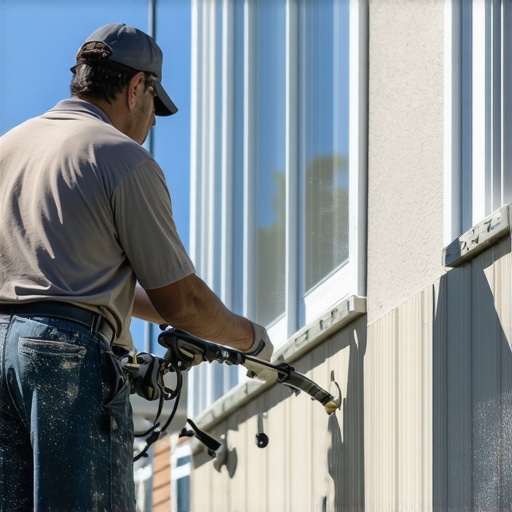
Insert an image showing the proper distance and angle of a spray nozzle cleaning siding effectively while avoiding damage.
Use Proper Technique for Rinsing
Switch to a high-pressure nozzle and rinse from the top down, maintaining a consistent distance. Use sweeping motions, and avoid holding the nozzle in one spot for too long—that’s how damage occurs. Remember, steady, controlled movements guarantee a safe, thorough rinse.
Mind the Nuances for Different Surfaces
Brick, wood, vinyl—each requires different settings. Brick can handle a bit more pressure, whereas wood sidings are sensitive and benefit from a softer spray. I once used too much pressure on my wooden fence and caused splintering; after that, I adjusted my technique and learned to treat each surface accordingly. Always research or consult trusted guides like 7 Tested Powerwasher Tips.
While many believe that blasting away dirt with high pressure is all it takes, the truth is that most people overlook subtle details that make or break your power washing results. One common myth is that increasing pressure always results in a cleaner surface; in reality, higher isn’t always better. Excessive pressure can strip paint, damage siding, or create uneven finishes, especially on delicate surfaces like wood or vinyl. Instead, mastering adjustable pressure settings and understanding material sensitivities ensures both effective cleaning and preservation of your home’s exterior.
Additionally, a crucial nuance is the angle of the spray. Many amateurs make the mistake of spraying straight on or too close, which can force water into seams, cracks, or beneath siding, leading to water intrusion and long-term damage. A gentle, angled spray maintains surface integrity while removing grime effectively.
Have you ever fallen into this trap? Let me know in the comments.
Why do some power washing techniques fail to provide lasting results even when pressure is high?
This often boils down to the lack of proper surface preparation and appropriate cleaning solutions. Simply increasing pressure without considering surface compatibility or the use of suitable detergents can cause dirt to resurface quickly or leave residue. The science behind detergents and surfactants shows that combining gentle yet effective cleaning agents with correct pressure makes a significant difference in durability. It’s worth consulting trusted resources like [trusted techniques for long-lasting exterior shine](https://powerwashexpertz.com/power-washing-home-trusted-techniques-for-long-lasting-exterior-shine) to learn about integrating chemistry with pressure for optimal results.
Furthermore, understanding the common myths surrounding power washing can save you from costly mistakes. For example, many assume that more water equals better cleaning, but over-wetting can lead to issues like mold growth or water seeping into the house. Knowing when to rinse and how to manage water flow, along with surface-specific nuances, elevates your technique from rudimentary to expert level.
In essence, the secret is in the details—adjusting your pressure, spray angle, and cleaning agents based on your home’s unique surfaces. Not only will this preserve your property’s integrity, but it will also ensure your power washing results last longer. For comprehensive guidance on mastering these nuances, check out [proven techniques for reliable trust and shine](https://powerwaspexpertz.com/power-washing-home-proven-techniques-for-lasting-trust-2). Remember, effective power washing isn’t about brute force; it’s about finesse and knowledge.Achieving and maintaining a pristine home exterior requires more than just the right pressure washer; it demands precision tools and effective methods that ensure longevity and safety. I personally rely on a few key pieces of equipment that elevate my power washing routine from good to great. First, a quality adjustable pressure washer with a variable PSI range allows me to tailor the force precisely to each surface—brick, vinyl, or wood—preventing damage while maximizing cleaning efficiency. For example, I prefer the Simpson MegaShot for its reliable performance and adjustable settings, which align perfectly with the advice found in trusted guides on [power washing safety](https://powerwashexpertz.com/7-tested-powerwasher-tips-to-prevent-siding-damage-2026).
Additionally, I invest in professional-grade nozzles, particularly the 25°, 15°, and soap applicator options. The 15° tip is invaluable for tough, stained areas, while the 25° covers larger surfaces without risking damage. Using specialized nozzles, coupled with correct technique, ensures thorough yet gentle cleaning, prolonging the life of your siding and paint. I also swear by high-quality foam cannons for applying cleaning solutions evenly across surfaces, which conserves detergent and reduces runoff—saving time and money.
For surface preparation, I rely on a durable, wide-mouthed, chemical-resistant tank sprayer. It’s crucial for applying biodegradable detergents uniformly, especially when dealing with mold or algae buildup, aiding the chemical reaction that makes dirt lift effortlessly. This approach ties into proven strategies from [trusted exterior cleaning methods](https://powerwashexpertz.com/power-washing-home-trusted-techniques-for-long-lasting-exterior-shine), emphasizing that proper chemical application complements pressure settings for enduring results.
Long-term power washing success isn’t just about equipment; maintenance plays a vital role. I recommend regularly inspecting and cleaning your nozzles and filters to prevent clogs, which can degrade performance and lead to uneven results. Also, flushing the system after each use extends equipment lifespan, maintaining optimal pressure and spray quality. This simple routine aligns with advice on [power washing equipment care](https://powerwashexpertz.com/trusted-power-wash-home-expert-tips-for-reliable-exterior-results), emphasizing proactive maintenance.
Looking ahead, the trend is advancing toward eco-friendly, battery-powered units that combine portability with power. With innovations in battery technology, cordless units are closing the performance gap with gas-powered washers, making maintenance easier and reducing environmental impact. I predict that in the next few years, these models will dominate for residential use, especially as accessory options improve. For now, I recommend testing out the latest models like the Greenworks 40V HP Pressure Washer, which balances efficiency with ease of use—perfect for homeowners aiming for reliable results without heavy equipment hassle.
If you want to keep your power washing equipment working efficiently, focus on consistent maintenance routines. Regularly replacing worn nozzles, cleaning filters, and storing units in dry, protected areas will ensure your tools serve you well for years. For quick tips on routine upkeep, check the detailed guide on [DIY power washer maintenance](https://powerwashexpertz.com/5-maintenance-steps-to-prep-your-powerwasher-for-spring-2026).
How do I maintain my equipment to ensure long-term performance?
Proper maintenance begins with simple but essential steps: keep your nozzles clean and free of debris, flush out detergent residues after each use, and store your equipment I n a climate-controlled space to prevent corrosion. Regular inspections for leaks, cracks, or worn parts allow for timely replacements, which avoids costly repairs down the line. Investing in quality hoses and couplings also reduces the likelihood of pressure drops and failures. Remember, well-maintained tools not only produce better results but also extend their lifespan, saving you money and frustration over time. Don’t hesitate to try out advanced techniques, like using adjustable nozzles to fine-tune your spray angle—an often overlooked detail that can make all the difference in maintaining the exterior of your home with confidence.
Lessons Hidden in Plain Sight That Transformed My Approach
One of the biggest realizations I had was that impatience often leads to damage. Rushing through a power washing session, in my eagerness to see quick results, made me ignore subtle surface cues, resulting in peeling paint and splintered wood. Slow, deliberate movements, guided by feedback from the surface, now lead my process. Another insight was that surface temperature and humidity dramatically influence cleaning effectiveness. Waiting for optimal weather conditions ensures the detergent reacts properly and reduces future issues like mold regrowth. Lastly, I discovered that investing in high-quality, adjustable nozzles and thoroughly understanding their settings isn’t just a luxury—it’s a necessity. The right nozzle can make the difference between a professional finish and a costly mishap, especially when cleaning delicate siding or intricate brickwork.