Ever scrubbed and sprayed only to see your home’s exterior look dull and streaky the next day? I remember my first real power washing attempt—thinking I could blast away years of grime with a super-strong jet. Instead, I ended up with streaks, some tiny chips in the paint, and a sinking feeling that I’d just made things worse. That lightbulb moment taught me a lot about what truly makes power washing effective and trustworthy.
Why Cutting Corners Can Cost You Trust and Shine
When I first started, I was eager to impress friends and neighbors. But I quickly learned that rushing through a power wash can leave behind more problems than it solves. Using too much pressure or the wrong cleaning solution can damage your home’s surface or cause streaks that make your house look worse than before. Trust me, it’s tempting to think that quick fixes are enough, but in reality, those shortcuts often lead to costly repairs and lost confidence.
Today, I want to share the secrets I’ve picked up over years of experimenting—secrets that will help you deliver a clean, lasting shine that builds trust with everyone who sees your home. These aren’t gimmicks; they’re proven techniques that work when done right. Want your home to look better and stay that way longer? Keep reading.
Is Power Washing a Waste of Money or Worth the Effort?
I used to believe that any power wash would do the trick. But I learned the hard way that not all methods are created equal. Early on, I applied high pressure directly on delicate surfaces, which caused paint to peel and brick to chip. That mistake made me realize the importance of tailored approaches—things like using the right nozzle, proper cleaning solutions, and correct pressure levels. One trusted source confirms that improper power washing can cause lasting damage, which is why understanding the proper techniques is crucial (learn more here).
If you’re wondering whether this process is worth the effort, I can tell you: with the right techniques, it’s not just worth it—it’s transformative. Your home’s curb appeal and long-term health depend on it. Ready to discover the proven methods that will keep your home looking its best for years? Let’s dive into the essentials that make a difference.
Start with the Right Equipment and Settings
My first step was always to choose the appropriate power washer. I quickly learned that a high PSI isn’t always better; it can damage delicate surfaces. I recommend starting with a pressure setting around 1500 to 2000 PSI for most home exteriors and adjusting based on the material. Use a fan tip nozzle instead of a pinpoint one to distribute pressure evenly, reducing the risk of chips or streaks. Remember, the goal is to clean without harm.
Prepare Your Surface and Surroundings
Before firing up the washer, I clear the area of obstacles, furniture, and plants. Cover nearby shrubs with plastic sheeting to protect them from overspray. I also wet the surface slightly to help loosen dirt, which makes cleaning easier and reduces the need for excessive pressure. This preparation step is often overlooked but is key to achieving long-lasting results that clients trust.
Apply Cleaning Solutions Correctly
Choosing the right cleaning solution is crucial. I mix eco-friendly detergents with water, following manufacturer instructions. I apply the solution using a low-pressure nozzle or a garden sprayer, focusing on the dirtiest areas first. Let it sit for 5-10 minutes, but don’t let it dry—keep the surface damp. This ensures the grime is loosened, making rinsing more effective and preventing streaks or residue that can tarnish your shine.
Use Proper Technique During Power Washing
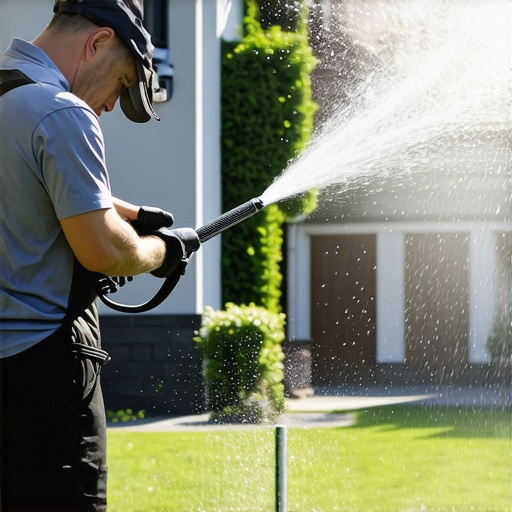
When I start rinsing, I keep the wand at a consistent 12-18 inches from the surface, moving in overlapping strokes to avoid streaks. I never stay in one spot too long—this prevents damage and uneven cleaning. I always work from bottom to top, so dirt and runoff don’t streak over cleaned areas. During my first attempt, I accidentally lingered too long on a brick wall, causing chips. Now, I move swiftly and methodically, which gives me a consistent, professional finish.
Focus on Detailing and Finishing Touches
Once the main surfaces are clean, I inspect for missed spots or streaks. For stubborn stains, I reapply cleaning solution and gently scrub with a soft-bristle brush. Rinsing again ensures no residue remains. This attention to detail builds trust because clients see you care about every inch of their home. It’s these small touches that elevate your work from average to exceptional.
Safety First to Maintain Confidence
Throughout the process, I wear safety goggles, gloves, and sturdy footwear. Proper safety measures protect you and ensure your work is trustworthy. If you’re unsure about tackling a delicate surface like painted wood or aged brick, consult trusted resources like this guide for expert tips. Safety isn’t just about personal protection; it’s about delivering reliable results that last.
By following these concrete steps—selecting the right equipment, preparing your surface, applying the correct solutions, using proper techniques, paying attention to details, and prioritizing safety—you’ll produce power washing results that inspire trust and shine that endures. Remember, consistency and care are your best tools for building a reputation that lasts.
Power washing is a powerful tool for boosting your home’s curb appeal, but many homeowners fall into traps due to misconceptions. Let’s dig deeper into the nuances that often go unnoticed, so you avoid costly mistakes and achieve trustworthy results.
Why More Pressure Isn’t Always Better
One of the most pervasive myths is that cranking up the pressure will clean faster and better. In reality, high PSI can damage surfaces like wood siding or delicate brickwork. Instead, a balanced approach using the right nozzle and pressure—typically between 1500 and 2000 PSI—is key. Trusted experts emphasize that improper pressure settings can chip paint, irreparably etch brick, or even cause water intrusion. For advanced techniques, always refer to proven methods to prevent damage while ensuring a deep clean.
The Hidden Danger of Using the Wrong Cleaning Solutions
Many homeowners assume that harsh chemicals or bleach are necessary to remove stubborn stains. However, this can backfire by damaging plant life, corroding surfaces, or leaving residues that tarnish the shine. Eco-friendly, pH-balanced solutions are often enough when applied correctly—allowing you to preserve the integrity of your surfaces. Applying these solutions with a low-pressure nozzle ensures thorough cleaning without compromise. For detailed guidance, check out trusted cleaning tips.
Advanced Techniques That Make a Difference
For experienced DIYers or professionals, understanding the importance of proper technique can unlock superior results. For example, working in overlapping strokes from bottom to top prevents streaking, while maintaining a consistent distance of 12-18 inches from the surface avoids damage. Additionally, pre-wetting surfaces can loosen dirt and reduce the need for aggressive pressure. This might seem minor, but these details are what differentiate average results from truly trustworthy, professional outcomes. To refine your skills, explore expert tips here.
Have you ever fallen into this trap?
If so, share your experience in the comments. Recognizing common pitfalls helps everyone improve. Remember, the goal isn’t just to clean, but to build lasting trust through careful, informed power washing. For more insights and advanced strategies, visit this resource.
Keep Your Equipment in Top Shape for Consistent Results
Investing in quality power washing equipment is just the first step; maintaining it properly ensures reliable performance and extends its lifespan. I personally recommend regularly checking hoses and nozzles for wear and tear, as cracks or blockages can compromise pressure and cleaning effectiveness. For example, replacing worn-out nozzles with high-quality, corrosion-resistant options like stainless steel ones can significantly improve your results and prevent costly repairs. Additionally, always drain and store your pressure washer in a dry, sheltered place during off-season to prevent corrosion and freezing damage. Following manufacturer guidelines for routine maintenance, such as changing oil and cleaning filters, keeps your equipment running smoothly and helps you trust your tools every time you power up.
Choose the Right Accessories to Enhance Results
Beyond the basic equipment, selecting the appropriate accessories makes a noticeable difference. I prefer using adjustable nozzles that allow me to change pressure levels on the fly, giving me better control over delicate surfaces. A surface cleaner attachment also speeds up cleaning large flat areas like driveways and decks while providing an even, streak-free finish. When it comes to detergents, eco-friendly solutions are my go-to—they’re safer for surrounding plants and animals but still tough on grime. Properly matching accessories and solutions to your specific project ensures long-term satisfaction and builds trust with clients or homeowners.
Monitor and Tackle Wear Over Time
Keeping your equipment and techniques finely tuned requires regular assessment. I set a schedule to inspect hoses, nozzles, and filters monthly, especially before big projects. If I notice reduced pressure or uneven spray patterns, I replace or clean components promptly. This proactive approach prevents minor issues from escalating into costly repairs or compromised results. Additionally, tracking your maintenance routines and outcomes helps identify patterns—if certain nozzles tend to clog or wear faster, you can plan ahead for replacements. Staying vigilant about wear and tear not only ensures consistent quality but also demonstrates your professionalism, reinforcing trust with clients who rely on your expertise.
How do I maintain my power washing tools over time?
To keep your power washing tools in prime condition, I recommend following a dedicated maintenance routine: after every use, flush the system with clean water to remove debris, and inspect all hoses and nozzles for cracks or blockages. Regularly change the oil in gas-powered units as per manufacturer instructions, and replace filters annually or when visibly dirty. Applying a protective coating or lubricant on moving parts can prevent rust and ensure smooth operation. Lastly, always store your equipment in a dry, temperature-controlled environment to avoid corrosion and freezing damage. For a comprehensive guide on extending your equipment’s lifespan, check out this trusted resource. Try scheduling monthly maintenance checks and see how your tools perform more reliably over time, leading to better results and long-term trust in your work.
< >
>
The Hardest Lesson I Learned About Power Washing
One of my toughest lessons was realizing that more pressure isn’t always better. I used to crank up the PSI, thinking it would cut through dirt faster. But I quickly damaged delicate surfaces like painted wood and brick, leading to costly repairs. Now I understand that a balanced approach with the right nozzle and pressure levels—typically 1500 to 2000 PSI—delivers safe, effective cleaning while preserving trust.
3 Myths About Power Washing That Held Me Back
I believed that harsh chemicals were necessary for stubborn stains, but eco-friendly solutions can do the job without risking damage or streaks. Also, I thought high-pressure spray was the only way, but gentle, targeted techniques produce better, longer-lasting results. Finally, I used to rush through the process, missing crucial details that build confidence and trust with homeowners.
What Experts Won’t Tell You About Power Washing
Many professionals emphasize equipment maintenance and proper technique, but the real secret is consistency. Regularly inspecting and maintaining your tools ensures each job meets expectations—building your reputation over time. Additionally, understanding the specific needs of each surface and adjusting your approach accordingly is key to delivering trustworthy results that clients will rave about.
My Essential Toolkit for Power Washing
I rely on adjustable nozzles for flexibility, eco-friendly detergents for safety, and surface cleaner attachments to speed up large projects. These tools, combined with proper technique, help me achieve professional results consistently. Trustworthy power washing isn’t just about equipment; it’s about using the right accessories for each job.
Where to Go from Here
If you’re eager to elevate your power washing game, start by mastering the fundamentals—selecting appropriate pressure, preparing surfaces properly, and applying solutions carefully. For advanced strategies, I recommend exploring trusted resources that provide proven techniques. Remember, building trust takes patience and precision, but the results are worth it.
Your Turn to Try
Now it’s your chance to put these insights into action. Power washing with confidence and care will set you apart as a trustworthy professional or DIY enthusiast. Don’t be discouraged by initial setbacks—every mistake is a step toward mastery. Are you ready to transform your home’s exterior and build lasting trust? Share your experiences or questions below, and let’s grow together in this journey toward reliable, beautiful results.
Reading through this post really resonated with me, especially the part about not relying solely on high pressure to get the job done. I used to think cranking up the PSI was the fastest way to clean, but I learned the hard way that it can easily damage surfaces like wood or delicate brick. Now, I focus more on techniques—like adjusting nozzle types and maintaining proper distance—which always results in a better, more trustworthy clean. Have any of you found that balancing pressure and technique actually improves your results while protecting surfaces? It’s interesting how small adjustments can make such a difference in building trust with clients or neighbors. Also, I appreciated the emphasis on equipment maintenance; keeping nozzles clean and replacing worn parts really does help keep operations efficient and results consistent. I wonder, what is everyone’s biggest challenge when it comes to equipment maintenance or surface preparation? Would love to hear tips from the community on avoiding common slip-ups and ensuring long-lasting, reliable cleaning outcomes.
I’ve definitely seen how rushing the process or using too much pressure can turn a simple power wash into a surface-damaging mistake. Your point about technique really hit home for me. I started out just blasting away, assuming more pressure equals a cleaner home, but I quickly learned that using the right nozzle, proper distance, and even pre-wetting surfaces makes such a difference. I also found regular maintenance, like cleaning nozzles and inspecting hoses, to be crucial for consistent results. As for surface prep, I always make sure to remove fragile items and cover nearby plants—it’s such a simple step that saves me headaches later. My biggest challenge is remembering to check my equipment for wear before starting a big job—nothing worse than losing pressure halfway through. Do others have tips for quick pre-job equipment checks or ways to streamline surface prep without missing anything? I think mastering these small details really helps boost confidence and trust from clients, leading to longer-lasting, trustworthy work.