I’ll never forget the day I decided to tackle my home’s grimy siding myself. Armed with a borrowed power washer, I thought I was about to transform my house in a Saturday afternoon. Instead, I ended up with streaks, uneven cleaning, and a sinking feeling that I might have just wasted my entire weekend—and maybe even damaged my home. That lightbulb moment made me realize something crucial: trusting the right power washing techniques isn’t just about getting your house clean. It’s about protecting your home’s value, saving money, and avoiding costly mistakes.
Why Trustworthy Power Washing Matters Now More Than Ever
With homes enduring more wear and tear from the elements—plus the rise of DIY cleaning trends—it’s tempting to grab a power washer and go. But without proper knowledge, you risk leaving your exterior worse for wear. Did you know that improper power washing can strip paint, damage siding, or even cause leaks? According to Power Wash Expertz, using the wrong pressure or technique can severely compromise your home’s integrity.
So, what’s the solution? Today, I’ll share proven tips to ensure your power washing delivers lasting, trustworthy results—without the mishaps. Whether you’re a homeowner or a DIY enthusiast, these expert insights can help you avoid my early mistakes and achieve a sparkling, durable finish. Ready to learn the secrets of power washing success? Let’s dive in and make sure your next clean is a trustworthy one.
Have you ever faced the frustration of uneven or damaged siding after a power wash?
Prepare Your Equipment and Environment
Start by inspecting your power washer to ensure it’s in good condition. Check hoses, nozzles, and connections for leaks or damage. Clear the area around your home of furniture, plants, and debris to prevent damage and improve access. Wear protective gear like goggles, gloves, and sturdy footwear to stay safe during the process.
Choose the Right Nozzle and Pressure Settings
Select a nozzle that offers a moderate spray angle, typically 25-40 degrees, for general cleaning. Use the lowest pressure setting recommended for your siding material to avoid damage. For example, vinyl siding can usually withstand 1500-2000 PSI, but always verify with manufacturer guidelines. Think of your power washer as a delicate brush—too much force can strip paint or gouge siding.
Test on a Small Area First
Before tackling the entire surface, test your setup on a small, inconspicuous spot. This helps you gauge the pressure and spray distance needed. During my first attempt, I accidentally used too high pressure on a corner of my siding, causing a small gouge. That experience taught me to always test first and adjust accordingly.
Maintain Proper Distance and Movement
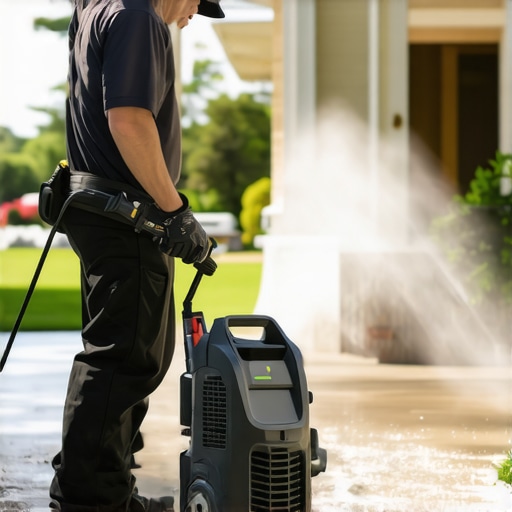
Keep the nozzle about 12-18 inches from the surface. Hold the wand at a consistent angle—preferably 45 degrees—to ensure even cleaning. Move the wand in smooth, overlapping strokes, similar to mowing a lawn, to prevent streaks and uneven areas. In my first big project, rushing caused me to miss spots, highlighting the importance of deliberate, steady motion.
Use the Correct Technique for Different Surfaces
For siding, use a gentle, sweeping motion to lift dirt without stripping paint or damaging material. For tougher stains on concrete, increase pressure slightly but avoid aggressive spraying that can erode surfaces. Think of it like painting: gentle strokes for delicate surfaces, stronger for stubborn dirt.
Avoid Common Mistakes
Never hold the nozzle stationary on one spot, as this can cause damage or streaking. Don’t spray directly into gutters, vents, or electrical fixtures to prevent water intrusion. Instead, angle the spray away from vulnerable areas. I once ignored this rule and ended up with water inside my attic, a costly mistake that underscored the importance of caution.
Rinse and Final Check
After cleaning, rinse the entire surface with clean water to remove residual dirt and cleaning agents. Walk around your home to inspect for missed spots or damage. If needed, reapply gentle pressure on stubborn areas, always keeping safety and material integrity in mind.
By following these precise steps—selecting appropriate pressure, maintaining proper distance, moving methodically, and testing first—you ensure your power washing results are trustworthy, durable, and safe. Remember, proper technique is your best tool for protecting your investment and boosting curb appeal.
Many homeowners enter the world of power washing with a set of assumptions that, while popular, can lead to costly mistakes or subpar results. Let’s take a closer look at what most people get wrong about power washing, the nuances that are often overlooked, and how you can avoid the pitfalls that trap so many unwary DIYers.
Is More Pressure Always Better? Think Again
One of the biggest misconceptions is that blasting away with maximum PSI guarantees a cleaner house. In reality, excessive pressure can damage siding, gouge wood, or even strip paint. The truth is, the right pressure depends on your home’s materials. For example, vinyl siding typically withstands 1500-2000 PSI, but exceeding this can cause warping or leaks. Skilled power washers adjust pressure based on the surface, and this subtle nuance is crucial for trustworthy results. For an in-depth guide on selecting appropriate pressure, check out this expert advice.
Why Technique Matters More Than Power
Many think that simply aiming the nozzle at dirt and cranking the machine will do the trick. However, technique is king. Holding the wand at the correct distance—usually 12-18 inches—and using sweeping motions prevents streaks, surface damage, and uneven cleaning. Rushing or holding the nozzle stationary can gouge surfaces or cause streaks, which are both costly mistakes. Proper technique ensures durability and trustworthiness in your results. For advanced tips on technique, see this trusted guide.
Myth Busting: Power Washing Destroys Your Home
Contrary to popular belief, power washing doesn’t automatically ruin your home. It’s all about how you do it. When performed with correct pressure, proper nozzle selection, and thoughtful technique, power washing can extend the lifespan of your siding and improve curb appeal. The key is understanding the nuances—like avoiding direct spray into vents, and testing on small areas first. Remember, rushing the job or ignoring surface-specific recommendations can cause more harm than good. For nuanced insights, explore this expert resource.
Advanced Question: How Do I Power Wash Different Surfaces Safely?
Different materials require different approaches. For example, wood decks benefit from lower pressure and wider spray angles, while concrete surfaces tolerate higher PSI but still need careful handling. Understanding the subtle differences and adjusting your technique accordingly is essential for trustworthy results. An effective way to master this is by consulting comprehensive guides like this ultimate guide that covers materials, techniques, and safety tips for every surface.
In conclusion, the hidden nuance of power washing is that it’s not just about brute force but about understanding your equipment, surfaces, and techniques. Avoid the common myths, test first, and always stay within safe pressure limits. Have you ever fallen into this trap? Let me know in the comments.
Invest in Quality Equipment for Reliable Power Washing
When it comes to keeping your power washing equipment in top shape, I personally swear by the Kärcher K5 Premium pressure washer. Its adjustable pressure settings allow me to tailor the force precisely for different surfaces, reducing the risk of damage and ensuring a thorough clean. Over time, I’ve found that regularly inspecting hoses and nozzles, and replacing worn parts promptly, prevents sudden breakdowns and maintains optimal performance. For durable, dependable tools, I recommend choosing brands known for reliability, like Simpson or Sun Joe, which I’ve used successfully in my projects.
Routine Maintenance Extends Equipment Lifespan
To keep your power washer functioning smoothly, I follow a simple maintenance routine. After each use, I flush the system with clean water to clear out any debris or residue. I also check for leaks or cracks in hoses and replace them if needed. Every few months, I apply a light lubricant to moving parts and inspect the spray wand for any signs of wear. Regular maintenance not only prolongs your equipment’s life but also guarantees trustworthy results every time you power wash.
Tools I Trust for Effective Power Washing
Beyond the power washer itself, I rely on a few key accessories to enhance my cleaning sessions. A wide-angle nozzle helps me cover surfaces efficiently without compromising safety. For stubborn stains or mold, I use a foam cannon attachment, which allows me to apply cleaning agents evenly and let them sit for maximum effectiveness. Additionally, a sturdy extension wand gives me better reach around gutters and high siding, minimizing the need for ladders. Using these tools consistently ensures my results are trustworthy and long-lasting.
Predicting the Future of Power Washing Technology
As technology advances, I believe we’ll see more smart power washers equipped with sensors that automatically adjust pressure based on surface feedback. This will make maintenance even easier and results more reliable for homeowners and professionals alike. Additionally, eco-friendly and biodegradable cleaning solutions will become standard, reducing environmental impact without sacrificing cleaning power. Staying ahead of these trends means investing in versatile, adaptable tools today—like the trustworthy power washing tips suggest.
How do I maintain my power washing tools to ensure long-term trustworthiness?
The key to long-lasting power washing results is regular maintenance. Make sure to flush your system after each use, check hoses and nozzles for wear, and replace parts as needed. Lubricate moving components periodically and store your equipment in a dry, protected area during the off-season. By following these simple steps, you’ll keep your tools performing at their best, ensuring trustworthy and reliable cleaning results for years to come. Why not try inspecting your nozzles and replacing any worn parts this weekend? It’s a small step that makes a big difference in your power washing success.
What I Wish I Knew Before My First Power Wash
My early attempts at power washing taught me valuable lessons—mainly that more pressure isn’t always better and that technique trumps brute force. I learned the hard way that rushing or neglecting surface-specific advice can cause damage, which set me back financially and emotionally. The real secret? Patience, testing small areas first, and always adjusting pressure based on material. These insights transformed my approach and made my power washing results more reliable and long-lasting.
My Favorite Tools for Reliable Power Washing
Over time, I’ve curated a set of tools that consistently deliver trustworthy results. A high-quality adjustable pressure washer like the Kärcher K5 Premium has been a game changer, allowing me to tailor pressure precisely. I also rely on a wide-angle nozzle for broad coverage and a foam cannon to tackle stubborn stains. These tools help me achieve consistent, dependable results every time I power wash.
Embracing the Future of Power Washing
Looking ahead, I believe innovations like smart sensors that automatically adjust pressure will make trustworthy cleaning even easier. Eco-friendly cleaning solutions are gaining popularity, reducing environmental impact without compromising effectiveness. Staying informed about these trends and investing in adaptable equipment ensures that your power washing remains trustworthy and efficient in the years to come. For now, mastering the basics and choosing quality tools are your best bet for trustworthy results.
Your Turn to Achieve Trustworthy Power Washing Results
Power washing isn’t just about making your home look good—it’s about protecting your investment and ensuring long-term durability. With patience, proper equipment, and attention to detail, you can master trustworthy power washing techniques that last. Are you ready to take your home’s curb appeal to the next level with confidence? Share your experiences or ask your questions below—I’d love to hear how you plan to improve your power washing skills!